

POWER SYSTEM DESIGN & STUDY GROUP
Power systems worldwide are undergoing a rapid transformation driven by renewable energy integration, electrification, climate commitments, and increasing grid complexity. Developing countries such as Pakistan face growing electricity demand alongside challenges in planning, protection, power quality, and regulatory compliance.Large-scale deployment of solar, wind, and captive generation has increased the need for advanced grid studies. However, many projects suffer from inadequate grid impact assessments, protection coordination gaps, power-quality violations, and limited independent technical review capacity. As a result, utilities and developers often rely on foreign consultants, increasing cost and dependency.
There is a strategic need to establish a dedicated Power System Design & Studies Group (PSDS) at NED University to provide credible, independent, and standards-based power system studies while building national capacity.
Vision
To establish PSDS as a national and regional center of excellence for advanced power system studies, compliance assessment, and professional capacity building.
Mission
PSDS aims to deliver industry-grade power system studies aligned with international standards, support utilities and industry, provide independent technical reviews, and bridge academia with real-world grid challenges.
Objectives
• Develop in-house expertise for advanced power system simulation and analysis
• Support utilities, regulators, IPPs, and industries with independent studies
• Promote compliance with IEC, IEEE, and utility grid codes
• Build capacity through professional training and postgraduate research
• Ensure sustainability through consultancy and funded projects
Expected Outcomes
• Improved quality and reliability of power projects
• Reduced reliance on foreign consultants
• Faster regulatory approvals through compliant studies
• Skilled national workforce in advanced power system analysis
• Sustainable revenue generation for the university
Scope of Activities
PSDS will function as an interdisciplinary power system studies group, focusing on analysis, evaluation, and independent technical assessment of electrical power systems across planning, operation, and compliance stages.
1. Load Flow and Short-Circuit Studies
Analysis of steady-state operating conditions and fault levels to assess network adequacy, voltage performance, equipment ratings, and system safety under normal and abnormal conditions.
2. Grid Interconnection Studies (Renewable, Captive, and Embedded Generation)
Assessment of technical feasibility, system impact, and compliance of new generation sources—such as solar, wind, and captive plants—prior to connection with utility networks.
3. Protection Coordination and Selectivity Studies
Evaluation and review of protection schemes to ensure correct fault detection, selectivity, coordination, and reliability of protective devices across transmission and distribution networks.
4. Power Quality and Harmonic Studies
Investigation of voltage and current distortions, unbalance, flicker, and harmonic interactions, along with assessment of mitigation measures to maintain acceptable power quality levels.
5. Power System Planning and Contingency Studies
Medium- and long-term planning studies, including contingency and reliability analysis, to evaluate system robustness, identify weaknesses, and support informed network reinforcement decisions.
6. Insulation Coordination and Over-Voltage Studies
Assessment of electrical insulation adequacy under switching and fault conditions to ensure equipment protection, system reliability, and compliance with accepted insulation coordination practices.
7. Utility-Required Compliance and Technical Reports
Preparation and independent verification of technical studies and documentation explicitly required by utilities, system operators, and regulatory authorities for grid connection approval, commissioning, and continued operation. These activities are strictly aligned with applicable grid codes, utility standards, and regulatory guidelines, and are intended to demonstrate formal compliance of power system designs and operating conditions under normal, contingency, and fault scenarios, supporting timely approvals and operational acceptance.
8. Third-Party Technical Review and Due Diligence
Provision of independent and objective technical assessment of power system designs, studies, and reports prepared by developers, EPC (Engineering, Procurement, and Construction) contractors, or consulting firms, with a focus on evaluating technical soundness, underlying assumptions, safety margins, risk exposure, and long-term system reliability beyond minimum compliance requirements. These reviews support informed decision-making by utilities, lenders, investors, insurers, and public agencies by identifying technical risks and providing assurance regarding system robustness and resilience.
7. Software and Infrastructure
PSDS will utilize industry-standard power system analysis software supported by high-performance computing infrastructure to deliver accurate, credible, and industry-aligned studies. In the initial phase, the group will focus on PSCAD and DIgSILENT PowerFactory (latest versions), as these two platforms together provide the broadest and most technically rigorous coverage of modern power-system studies.
PSCAD will be employed for detailed electromagnetic transient (EMT) simulations, enabling accurate modeling of fast-switching phenomena, converter-based resources, HVDC systems, protection behavior, and control interactions. DIgSILENT PowerFactory will serve as the primary environment for steady-state, quasi-dynamic, and RMS-based analyses, including load flow, short-circuit, contingency analysis, stability studies, protection coordination, power quality, and grid-code compliance assessments. The complementary strengths of these tools allow PSDS to address the majority of planning, operational, and compliance-driven studies required by utilities, regulators, and developers.
Initial funding will prioritize licensed software acquisition, vendor-supported onboarding, internal capacity building, and laboratory infrastructure development. As PSDS engagements expand, additional specialized software tools will be evaluated and adopted on a need-basis, driven by specific study requirements, client demands, or regulatory standards.
8. Human Resource Strength
The group currently comprises on senior faculty and looks to add specialized researchers, and postgraduate students working under a structured quality-assurance and peer-review framework to ensure technical credibility.
9. Capacity Building
PSDS will offer short courses, utility-focused workshops, hands-on software training, and industry-linked postgraduate research programs to address the national skills gap.
10. Funding Justification
Initial funding is required for the acquisition of core software licenses, high-performance computing infrastructure, vendor-supported onboarding, internal capacity building, and the development of standardized study templates. Within one to two years of operation, PSDS is expected to become partially to fully self-sustaining through consultancy projects, utility engagements, and industry-sponsored studies.
To establish the initial technical capability of the group, priority is being given to PSCAD and DIgSILENT PowerFactory, which together cover the majority of planning, operational, EMT, and compliance-driven power-system studies.
11. Strategic Importance
PSDS aligns with national energy security goals, renewable integration targets, industrial competitiveness, and academic-industry collaboration, positioning NED University as a technical authority in power system studies.
PSDS TEAM
Dr. Muhammad Ali Baig
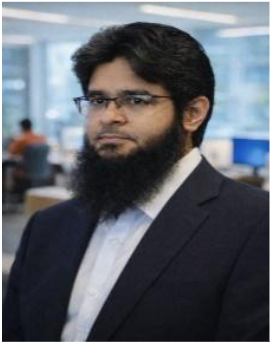
Lead, Power System Studies Group (PSDS)
Assistant Professor, NED University of Engineering & Technology
Dr. Muhammad Ali Baig will be leading the Power System Studies Group, bringing with him extensive academic experience and a broad technical background spanning power system, signal processing, and computational analysis. He has been serving at NED University of Engineering & Technology since 2007, with long-standing involvement in both undergraduate and postgraduate education.
He holds Master’s and PhD degrees in the field of Electrical Engineering and has taught across foundational and advanced areas. His academic career reflects strong foundation in system-level analysis, signal-based modeling, numerical and computational methods, complemented by applied work in power systems, renewable energy integration, and grid-related studies.
Dr. Baig has supervised multiple postgraduate research projects and is currently supervising a PhD scholar in spatio-temporal wind power forecasting, reflecting his engagement with data-driven and analytically rigorous approaches to modern power-system problems. His work also demonstrates a strong grounding in PQ theory–based analysis (instantaneous power theory), particularly in harmonic mitigation and active power filtering, where analytical power decomposition guides adaptive compensation strategies.
Dr. Baig’s expertise lies in bridging theory, computation, and application, enabling structured analysis of complex power-system phenomena. He is experienced in guiding technically rigorous studies that require careful modeling, validation, and interpretation of results.
As head of the Power System Studies Group, Dr. Baig will provide academic leadership, technical oversight, and quality assurance, ensuring that studies are conducted on sound analytical foundations and documented using standardized, professional reporting formats. Under his leadership, the group is expected to develop strong technical depth alongside a disciplined, consultancy-oriented approach, enabling it to undertake power system studies and technical reviews aligned with national and international industry expectations.
Dr. Abdul Ghani Abro
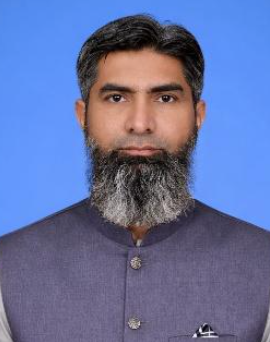
Protection Coordination and Optimization Lead
Associate Professor, NED University of Engineering & Technology
Dr. Abdul Ghani Abro is a power-systems professional with strong expertise in power system protection, protection coordination, and advanced optimization techniques applied to electrical networks. He has extensive academic and applied experience in the design, analysis, and coordination of protection schemes, supported by both teaching and research at undergraduate and postgraduate levels.
Dr. Abro has taught Electrical Power System Protection courses to undergraduate and postgraduate students and have supervised multiple Final Year Design Projects and Masters Research Theses focused on distance protection, differential protection, and overcurrent relay coordination, including their modeling, implementation, and
performance evaluation. His supervisory work bridges theoretical protection principles with practical system behavior under faulted and stressed operating conditions. Dr. Abro, doctoral research focused on the application of swarm-based optimization algorithms in power systems optimal operation. This background enables him to
approach protection coordination not only from a compliance and reliability perspective, but also with a system-level optimization mindset, ensuring selectivity, speed, sensitivity, and security under varying network conditions.
Within the Power System Design Studies Group, he is primarily responsible for protection coordination studies, including relay setting optimization, discrimination analysis, and grid-code-compliant protection design for transmission, distribution, and renewable-integrated networks.
Dr. Fezan Rafique

EMT, Dynamic Studies, and Advanced Simulation LeadAssistant Professor,
NED University of Engineering & Technology
Dr. Fezan brings strong expertise in power system studies using PSCAD, particularly for electromagnetic transient (EMT) analysis of transmission and distribution networks. His professional services include detailed modelling of power systems, fault analysis, protection studies, reactive power control, integration of renewable energy sources, and validation of control and protection schemes under dynamic and transient conditions. He has extensive experience in load flow, short-circuit analysis, arc-flash studies, and protection coordination, supported by industry-standard tools such as PSCAD, MATLAB/Simulink, PSS®E, and ETAP.
With a solid blend of academic depth and practical engineering insight, Dr. Fezan has supervised and executed numerous industry-relevant projects involving real-time simulations, data-driven power system protection, and grid reliability assessment. His research contributions are published in leading international journals, reflecting his capability to deliver technically sound, reliable, and standards-compliant power system solutions for utilities, consultants, and research organizations.
Engr. Adnan Ali

Power System Planning and Utility Compliance Lead
Assistant Professor, NED University of Engineering & Technology
Mr. Adnan Ali is an Assistant Professor in the Department of Electrical Engineering at NED University of Engineering & Technology, with more than 15 years of academic and professional experience in teaching, research, operation and maintenance and power system studies. He holds
a BE and ME in Electrical Engineering (Power Systems) from the NED University of
Engineering & Technology Karachi, Pakistan. He has served as Assistant Manager (Operations- 11KV) at K-Electric Utility for one year and As Facilities maintenance engineer in Pakistan International Airlines Corporation (PIAC) for around four years. His academic background and research expertise encompass Electric Utility Operations, Industrial Facilities Maintenance and Power System studies supported by a strong Academic background publication record and extensive undergraduate supervision.
Within the Power System Studies Group, Mr. Adnan is responsible for power system planning studies, with a particular focus on Utility-Compliance reports. All electric utilities and the consumers especially bulk consumers need to comply with regulations both regional and national for safe, reliable, legally bound and serving the larger interest of the public connected to the network. Regulators require compliance reports to make sure that the system will operate predictably and deliver required level of reliability when put in service. As power system consultant Mr. Adnan makes sure you meet all the connection requirements with the latest practices and software in the market.
Mr. Adnan has extensive experience in modeling and simulation of generation, transmission, and distribution networks, enabling detailed analysis of system behavior under varying operating scenarios. He is proficient in PSS®E and ETAP, and can prepare comprehensive technical reports and planning documentation in compliance with international standards and utility grid codes. His role strengthens the group’s capability in Utility compliance reports ensuring that proposed solutions are technically sound, standards-compliant, and implementation-ready.
Ms. HAFSA
Power System Planning and Analysis Lead
Lecturer, NED University of Engineering and Technology.
Ms. Hafsa holds a Master of Engineering (ME) in Electrical Power Systems from NED University of Engineering & Technology. She has a strong academic and technical background in electrical power systems engineering, with particular emphasis on system analysis and planning.
Her areas of expertise include power system planning, encompassing electricity demand and supply forecasting, scenario analysis for future system growth, and assessment of renewable energy integration. She is experienced in conducting load flow, short-circuit, and protection coordination studies for low-, medium-, and high-voltage power systems.
Ms. Hafsa is proficient in the use of industry-standard software tools, including LEAP for long-term energy planning, demand forecasting, and scenario development, and ETAP for detailed power-system modeling, load flow analysis, short-circuit calculations, and protection coordination studies. She also utilizes MS Excel for structured reporting, data analysis, and graphical presentation of results.
She is fully prepared to undertake load flow and protection coordination studies, including system data collection, network modeling, simulation, and interpretation of results. Ms. Hafsa is capable of delivering complete and professionally documented engineering reports, including relay settings and coordination curves, in accordance with project specifications and applicable regulatory requirements.